A Decade of Transformation How FIM Redefined Its Role in the Community
Time flies when you’re having fun.
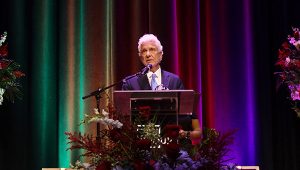
The familiar saying seems especially fitting this August, as the Flint Institute of Music (FIM) celebrates 10 years of leadership under President and CEO Rodney Lontine. A decade in any executive role is a milestone worth reflecting on, particularly when it has been marked by sustained growth, innovation and an evolving relationship with the community.
When Lontine arrived in Flint in 2016, he immediately recognized the organization’s tremendous potential. A Colorado native whose career spans advertising, arts management, entrepreneurship, education and nonprofit leadership, he was drawn in not only by Flint’s rich artistic legacy, but also by what he believed it could become.
“The arts are a positive change agent — they always have been,” Lontine told My City Magazine shortly after accepting the position. “The world thinks they know what Flint is. Now we need to shift the perception to what it really is.”
Over the past decade, FIM has evolved into a far more expansive organization. New programs have emerged. Professional theatre has taken root. Music and expressive arts therapy has grown dramatically. Community partnerships have flourished. Technology has modernized operations. The Capitol Theatre and Whiting Auditorium have joined the organization, expanding both its reach and its ability to serve audiences throughout the region.
Just as importantly, FIM’s presence now extends well beyond the Cultural Center campus.
 “The most significant change — and probably the most important to me — has been the shift in our culture,” says Lontine. “When I arrived, many people viewed FIM as an organization whose programming was centered almost exclusively on the Cultural Center campus, and in too many cases, exclusive in general. I’m not saying outreach didn’t exist. It did, but perception is reality and we weren’t fully engaged or a part of the broader community conversation, involvement or collaboration.”
Today, that conversation looks very different.
Growing With the Community
When reflecting on the past decade, Lontine returns to one central theme: building stronger connections throughout Flint and Genesee County.
“Until you change perception, reality is never going to follow,” he says. “We could be on every street corner every day, but if people still believe we’re not welcoming or connected to the community, they aren’t going to engage.”
Over the past 10 years, FIM has intentionally broadened its presence through outreach programming, strategic partnerships and collaborations that bring the arts directly into neighborhoods, schools and public spaces.
Programs such as Music Around Town have dramatically increased the number of free and low-cost performances available throughout the community. Partnerships with organizations representing diverse cultural traditions have introduced FIM to new audiences while strengthening relationships across the Greater Flint area. And the Genesee County Arts Education and Cultural Enrichment millage has affirmed the community’s commitment to the arts while making programming much more affordable — and therefore attainable — for Genesee County families.
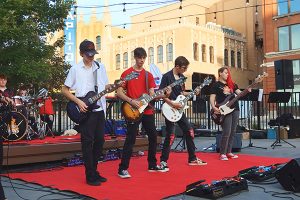
Community celebrations, outdoor concerts, educational initiatives and neighborhood events have made the arts more accessible to people who may never have attended a traditional performance or enrolled in a class at the Cultural Center.
“We’re becoming more a part of the fabric of the community,” says Lontine. “You don’t have to come to the Cultural Center to find us. We’ll join you where you are.”
Becoming a Multi-Disciplinary Arts Organization

While FIM increased its presence throughout the community, it was also redefining itself from within.
Over the last decade, the organization has evolved from an institution primarily associated with music education and orchestral performance into a comprehensive performing arts organization encompassing music, dance, theatre, education, health and wellness, community engagement and the management of multiple performance venues.
One of the defining milestones was the creation of the Flint Repertory Theatre.
The addition of a professional regional theatre company diversified artistic opportunities for audiences, students and professional performers alike while attracting entirely new patrons to FIM.
“It opened us up to a very different audience and cultural vibe,” Lontine says. “Repertory theatre is distinct and attracts people who might never attend a symphony concert or music festival. It created something unique for Flint.”
The organization’s educational offerings evolved alongside that growth. Theatre instruction became fully integrated into the Flint School of Performing Arts, complementing its long-established music and dance programs and creating a more comprehensive performing arts curriculum.
“Creating Flint Rep and moving the Flint Youth Theatre instructional programs into the School of Performing Arts rounded out our programming,” Lontine says. “We were a school of the performing arts that lacked theatre instruction.”
Additional growth included the intentional focus on community programming, the creation of a dedicated community programs department and the rapid development of music and expressive arts therapy services.
Among the most innovative initiatives has been FIM’s partnership with the IGNITE program at the Genesee County Jail, which combines music instruction, expressive arts therapy and recording technology to serve incarcerated individuals through creativity and rehabilitation.
FIM’s transformation accelerated even further in 2021 with the integration of Whiting Auditorium and the Capitol Theatre. Together, these additions expanded programming opportunities while establishing FIM as the steward of five performing arts venues serving the greater Flint community.
“With the addition of the Whiting and Capitol, the creation of Flint Rep and bringing theatre into the School of Performing Arts, we truly became a complete, multi-disciplinary performing arts and education organization,” says Lontine.
Innovation Through Challenge
Just as FIM’s transformation was gaining momentum, the COVID-19 pandemic disrupted performing arts organizations across the country.
For Lontine, however, the unprecedented challenge also created an unexpected opportunity.
“The pandemic couldn’t have come at a better time for us,” he says, acknowledging the irony. “We had just experienced tremendous growth and change. This unexpected break gave us time to digest, plan, organize and think differently.”
Rather than going silent, FIM found creative ways to remain connected through unique outdoor performances, livestreamed concerts, virtual fundraising events and innovative community programming.
“We didn’t completely shut down like many organizations,” Lontine says. “We found new ways to stay relevant.”
Thanks to resources like the American Rescue Plan Act (ARPA) as well as the Genesee County Arts millage, the organization was also able to express its persistent commitment to its artists. While orchestras across the country suspended performances and reduced compensation, FIM made the choice to provide for its Flint Symphony Orchestra personnel.
“We continued paying our musicians as though it was business as usual,” Lontine recalls. “It was the right thing to do.” For FIM, the “right thing” also meant paying all production personnel throughout the season including ushers, security, and stage crew who were scheduled to work canceled performances.
The result was an organization that more than simply survived a challenging season. “We came out of the pandemic stronger than when we went in,” Lontine says.
Investing in Long-Term Sustainability
While many of FIM’s most visible changes occurred on stage and throughout the community, equally significant transformation was taking place behind the scenes.
Over the last decade, FIM has more than doubled in size while making substantial investments in technology, infrastructure and organizational systems designed to support long-term growth.
A modern customer relationship management (CRM) system improved patron engagement and data analysis. Mobile ticketing enhanced convenience and accessibility. New accounting, human resources and venue management platforms streamlined operations, while investments in security, facility improvements and operational technology strengthened efficiency and safety across the organization.
These changes may not be as visible as a performance or production, but they have created the infrastructure necessary to support FIM’s continued evolution.
During the same period, FIM increased staffing, strengthened fundraising efforts, and amplified its operating budget. Thanks to greater awareness in the community, as well as an intentional commitment to building long-term relationships with like-minded friends and devoted philanthropists, FIM also continued growing its endowment.
The establishment of a dedicated Flint Symphony Orchestra endowment and a Program Reserve Fund along with continued investment in educational and community programming, has positioned the organization for long-term sustainability and future success.
A Framework for the Future
In 2024, FIM adopted a new mission, vision and seven-year strategic framework designed to guide the organization’s next chapter.
For Lontine, the framework represented less of a new direction than a clearer articulation of values and pillars that had already been guiding the organization for years.
“The framework gave us the guardrails,” he says.
Those guiding principles focus on maximizing community impact while advancing inclusion.
“If it doesn’t maximize our assets, our reach or our positive impact, then why are we doing it?” he asks. “And if it doesn’t advance community inclusion, then we need to rethink it.”
The framework also reflects a broader understanding of the role the arts play in community well-being.
“We want arts and entertainment to become even more integrated with families, education and health,” says Lontine. “Health takes many forms: mental health, community health, economic health and spiritual health.
The arts contribute to all of them.”
Looking Ahead
As FIM begins its next decade, its leadership remains focused on deepening community impact while ensuring future generations continue to benefit from the arts.
“There is so much value in the arts programs available at FIM, giving kids and adults experiences that help them grow mentally and emotionally,” says Janice Sova, newly appointed Chair of the FIM Board of Trustees. “But we want to ensure those experiences are not a one-time event. We must continue thinking about how we keep people engaged and help them recognize the lifelong benefits of participating in the arts.”
For Lontine, success isn’t defined by any single venue, program, person or initiative. Instead, it depends on growing a culture and a family of staff, artists, community and donors that welcomes innovation, embraces challenges and remains willing to evolve.
“FIM needs to preserve that culture,” he says. “But also understand that success depends on a strong and dedicated team working and believing together supporting that culture.”
That philosophy has shaped both his leadership and FIM’s remarkable journey over the past decade.
When Lontine first arrived in Flint, he spoke about bringing the arts into neighborhoods, developing new audiences, exploring new venues and helping people recognize the transformative role arts and culture can play in the community. He envisioned an organization that would contribute to Flint’s redevelopment while making performing art visible and a welcoming part of everyday life.
Ten years later, much of that vision has become reality.
Today, FIM’s impact can be found in concert halls and classrooms, on neighborhood streets and community stages, in music therapy sessions, theatre productions and educational programs. Most importantly, it can be found in the lives of the people it serves: students discovering confidence, families creating lasting memories, audiences returning year after year, and communities brought together through the power of the arts.