Flint Rep Opens Season with Bold New Take on A Streetcar Named Desire

Flint Repertory Theatre lifted the curtain on its 2025–26 season with one of the most celebrated works of American theatre: Tennessee Williams’s A Streetcar Named Desire. But in true Flint Rep fashion, it had never been seen like this.
Widely regarded as a cornerstone of 20th-century drama, Streetcar continues to resonate with audiences because its themes — illusion versus reality, fragility versus strength and the search for belonging — are as compelling now as when the play premiered in 1947. “The play is as much, if not more, relevant today,” said Nicole Samsel, interim artistic director and managing director of Flint Rep. “That’s one of the reasons a work of art endures.”
Director Joshua Morgan took that legacy and reshaped it for a modern audience. “The play is a collection of cultural artifacts,” he told his cast during their first rehearsal. “It is so human and so simple. It deals with needs we all have.” Yet Morgan’s vision was far from traditional. He immersed audiences in the disorientation and inner chaos of the characters, offering a visceral reflection on mental illness, identity and resilience.
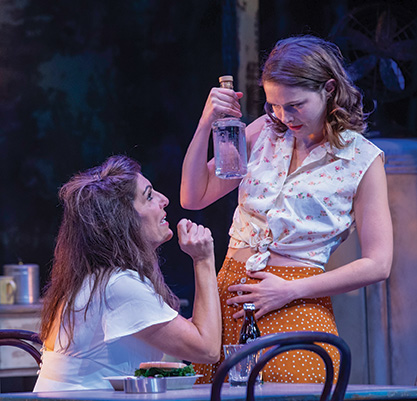 That immersion was crafted through every design element of the production. The set was both a physical world and a mirror of the characters’ psychological states. A dynamic soundscape heightened this effect, blending live music performed by onstage actors with original compositions from sound designer Katie Hopgood. Inspired by New Orleans’s rich musical heritage, Hopgood’s work lent authenticity while underlining the play’s cultural significance.
Costumes, too, took on symbolic weight. Mixing period garments with modern elements, they were designed not simply as clothing but as extensions of the characters themselves. As the characters evolved internally, their outward appearance transformed to reflect that journey. “It’s not just about the garment the character wears,” explained costume designer Matt Snellgrove. “It’s about how they wear them.”
Morgan also situated the play’s themes in a broader cultural frame. “The New Orleans of the play is a very transient culture — a very doors-open society,” he said. “We’re exploring the idea of interior versus exterior.” His vision challenged the audience to consider what’s happening outside the doors and how it affects what happens within, and, more broadly, how external circumstances shape our internal well-being.
The season opener was historic for another reason: Streetcar was the first Flint Rep production staged at the University of Michigan-Flint Theatre, the company’s temporary home for the season. It was a fitting beginning for a year that promises fresh perspectives, bold innovation and continued commitment to professional theatre in Flint.