When Limitation Becomes Possibility: Ravel’s Left Hand Concerto
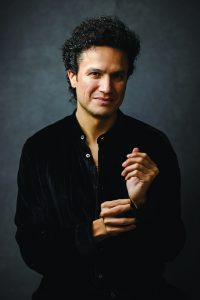 Great works of art often begin with an unexpected challenge. In the case of Piano Concerto for the Left Hand by Maurice Ravel, that challenge was simple to describe, but extraordinarily difficult to overcome.
The task? Write a complete piano concerto … for one hand.
The piece was commissioned by Austrian pianist Paul Wittgenstein, who lost his right arm while serving in World War I. Refusing to give up his career, Wittgenstein instead reimagined what was possible, commissioning a number of composers to write works he could perform with his left hand alone. Many answered the call, including Benjamin Britten, Sergei Prokofiev and Richard Strauss.
But it was Ravel’s concerto that endured.
For pianist Abdiel Vázquez, who will perform the piece on the Flint Symphony Orchestra’s final classical program of the season in May, mastering the piece offers a rare opportunity to step into that same spirit of challenge and reinvention.
“Ravel is famously one of those very smart, once-in-a-generation composers who truly know how to write for each instrument they choose,” Vázquez says. “His imagination feels limitless … he carried piano technique to new heights.”
Even so, the experience of performing the concerto is unlike anything else. Though Vázquez has performed as a pianist with FSO in the past, audiences know him best for his guest conducting appearances at the annual Holiday Pops concert. Though he’s grown familiar with the Whiting Auditorium over the years, this particular performance creates a new and rewarding challenge.
“For my left hand, accustomed to a supporting role when playing the piano or conducting, playing a full concerto on its own feels empowering!”
That empowerment is built through discipline. Vázquez is performing the piece for the first time, and preparing it requires deliberate focus, stripping the process down to its essentials.
“Practice slowly and with intention,” he explains. “With only one hand responsible for everything — melody, accompaniment and inner voices — there’s no room for autopilot. Every note must be understood, shaped and placed with care.”
That level of attention reflects the very origin of the piece. What began as a practical solution for a pianist adapting to life after war has come to symbolize something more profound by redefining the rules of possibility.
“I think this is just one more example of the best of the human spirit,” Vázquez says. “We not only adapt and survive, we thrive.”
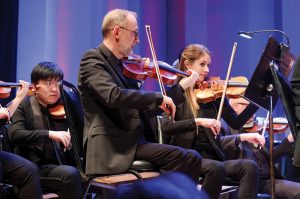 For him, that story extends beyond a single performer. Wittgenstein relied on a community of composers willing to meet him where he was and create something new.
“But we also look for our community for support,” Vázquez adds. “The composers who wrote these pieces for him represent that too: we can’t do it alone.”
The idea of meeting challenges with grit, creativity and collaboration sits at the core of the arts. It’s what allows limitations to become starting points, rather than endpoints.
For audiences, Vázquez offers a simple invitation: stay curious.
Don’t close your eyes and imagine two hands on the piano, he suggests. “Try to wonder how is all this possible with just five fingers. Be mesmerized … There is sonic magic in every bar of this concerto.”
Tickets to the May 16 FSO concert, Mystery & Reverie, are available online or by calling the Ticket Center at 810.237.7333, visiting a box office location at Whiting Auditorium or the Capitol Theatre.
Join us at 6:30 p.m. before the concert to learn more about this artistic triumph during “Inside the Music,” a pre-concert presentation.