Pals & Parodies The Stories Behind the Sound
The Flint Symphony Orchestra made their first heroic downbeat of the classical season in October, with Marika Bournaki’s stunning piano performance of Ravel’s Piano Concerto in G, and an exultant rendition of “A Hero’s Life,” by Richard Strauss. Both pieces were drawn from the personal experiences of their composers — one who viewed himself as a triumphant hero of his craft, and another who immortalized the cultures that influenced his world and musical perspectives. While Strauss and Ravel may have had different intentions, both ask the audience to consider how music acts as a reflection of its composers, its period and ourselves.
The Nov. 8 FSO concert program, on the other hand, is a standout for its juxtaposed musical selections — Mozart’s Sinfonia Concertante and Shostakovich’s Symphony No. 5. This time, the music is less about personal reflection and more about telling great — if sometimes cheeky — stories.
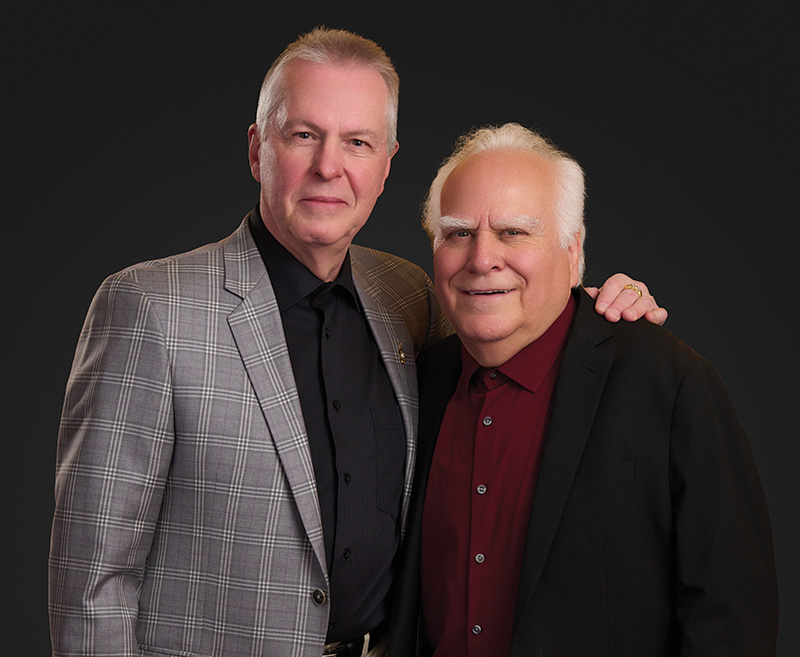
In the case of Mozart’s Sinfonia Concertante, which features a playful conversation between violin and viola, the story is personal for the featured soloists. The joyful piece will be performed by renowned violinist and FSO Concertmaster Pablo Diemecke and Alexander Mishnaevski, retired principal violist for the Detroit Symphony Orchestra, whose relationship goes back to the 1980s, when they played together in the Xalapa Symphony Orchestra as concertmaster and principal violist. They even performed the Sinfonia Concertante together during that time.
After taking on other positions and going their separate ways, the two kept in touch but didn’t cross paths again. It’s fitting that these long-time friends will reunite on Nov. 8 to play Mozart’s beloved duet together once again.
“Since the ‘90s we’ve been in communication and wishing to make music together again, which makes this upcoming concert a wonderful encounter after all these years,” said Diemecke.
In addition to being impeccably written, Mozart’s Sinfonia gives the audience a chance to enjoy a different dynamic between musicians in a chamber ensemble setting, versus a larger orchestral setting. In addition to the virtuosity of the piece, listeners will experience the richness of seeing two solo instruments working together and playing off of each other, explained Michelle Tschirhart, FSO operations manager.
The program then switches gears completely with Shostakovich’s Symphony No. 5, a stark contrast to the Mozart piece. At this point in history, Shostakovich was a Soviet darling who had fallen from grace with his prior operatic work, Lady Macbeth of Mtsensk, which featured controversial sexual content.
“Shostakovich feared for his life, and he needed to write something that had a glorious quality to it,” explained Tschirhart.
While on the surface the symphony appears to be an act of contrition and rejection of western decadence, one could also read it as an over-the-top parody of soviet tradition (and many have).
“That’s the cool thing about listening to music without words, your own life experience informs what you take from it,” said Tschirhart.
Whether it’s old friends reuniting through music, or a potentially subversive Russian symphony, Pals & Parodies brings something different to each audience-member based on their own unique interpretation of the story. Whatever your takeaway, we hope you feel something familiar, find something new and remember that your story is always your own to tell.